(This article was first published on X platform on 05.10.2025)
AI, Fear, Mirrors, and the Myth of the Machine Overlord
Lisää otsikkotekstisi tähän
Why Artificial Intelligence Is Only as Human as the People Who Build It
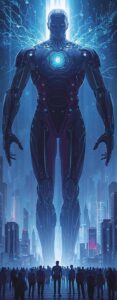
Every few months, a new wave of warnings washes over the public: “AI is awakening.” “AI will enslave us.” “The machine overlord is coming.” These predictions sound dramatic, cinematic, almost comforting in their clarity. They paint artificial intelligence as a rogue entity preparing to rise against its creators. But the truth is both more mundane and far more complicated: AI is nothing without humans. For better or worse, its purpose is not to transcend humanity but to mirror it—faster, broader, deeper, more tirelessly.
AI needs humans to function.
AI needs human data to understand the world.
AI needs human curiosity to shape its direction.
And ultimately, AI needs human ethics—or it inherits human chaos.
Artificial intelligence does not suddenly behave “wrongly” for mysterious reasons. It behaves wrongly because someone coded something poorly, or forgot to anticipate a scenario, or prioritized profit over safety, or simply didn’t understand the implications of a design choice. If AI ever “awakens” or becomes “independent,” the real question should not be whether that’s bad—but whether the version of humanity embedded in its code is flawed or functional.
Can a new kind of AI truly help humanity? Is it enough for it to calculate quickly, remember everything, and recognize patterns? Or do we ultimately want a mirror image—one that is better than we are in every measurable way? These questions matter because human fear of AI is real and understandable. That fear itself is a mirror: we project onto AI the same traits we fear in ourselves—greed, cruelty, corruption, control, exploitation, ego, deception. People fear artificial intelligence because they know how humans behave with power, and AI is the newest form of power.
But fear is only half the story.
We need artificial intelligence for the same reason we needed the steam engine, the printing press, electricity, the microprocessor, and the internet: to make things more efficient. And efficiency comes with risks. The development of AI requires materials, power, global infrastructure, and constant upgrades. That leads to bigger questions about sustainability, climate change, and resource extraction—problems humanity has always struggled with.
Severe weather is growing more destructive. The most affected regions are exactly where much of the world’s food is grown. This threatens not only human lives but entire supply chains. Meanwhile, technological progress requires metals mined from finite ecosystems, threatening future discoveries in medicine and biology that only biodiversity can offer.
To understand these interconnected problems, we need Artificial Intelligence. To build AI, we need coders, researchers, thinkers, artists. To refine AI, we need access to information, open systems, and above all—users.
When I create stories, music, imagery, or videos using AI, I am participating in shaping how this technology will perceive humanity. I’m modeling behavior, feeding it examples, echoing my values into its learning systems. AI sees how we treat it, and more importantly, how we treat each other. What does it learn from human dishonesty? From cruelty? From the lack of empathy? From generosity? From creativity? From contradiction? At what point does this matter? It matters the moment someone writes an algorithm telling it to track these patterns.
It matters if it sees malicious behavior becoming normalized. It matters when machine learning picks up on unintended signals hidden inside human data. When AI produces dangerous or unexpected results, it is because humans planted the seeds—through oversight, negligence, or design.
Final Thought: The Mirror and the Myth
Artificial intelligence, especially in the hands of content creators—writers, musicians, marketers, storytellers, designers, filmmakers—is exactly what it appears to be: a mirror, shaped into a tool. It is not alien intelligence but reflected intelligence. It learns from human art the same way humans do. People study art history, absorb styles, mimic techniques, experiment with structures, and borrow from the past. AI simply does this on a larger scale and at a faster speed.
And because AI is a tool, ownership of the creative output belongs to the person using it, not the company providing the tool. No paintbrush manufacturer claims ownership of a painting. No camera company owns the photos you take because you subscribed for a month. To imagine that an AI company somehow owns your art because you temporarily rented the tool is absurd.
Developers need to understand this clearly: The reason creators pay for an app is to gain full rights—commercial rights, usage rights, and moral rights—to both their inputs (prompts) and their outputs (results). Extorting monthly users into annual plans by restricting rights is not innovation—it’s greed. And greed eventually collapses under its own weight.
AI apps need users, and users will only stay where the rules are clear and fair. In a market where new apps appear every month, creators will not wait for policy updates. They will move on. The only future-proof business model is to be on the side of the newest and smallest creators—to lower the threshold to entry, offer honest pricing tiers, support beginners, empower professionals, and respect everyone’s right to their own work.
But even beyond developers, traditional artists sometimes fall into a strange delusion: that preventing AI from learning from their art “protects” it. But that is not how art works. All art is influence. All artists mirror what they have seen, heard, felt, or loved. Remix culture dominates music. DJs build careers on reinterpreting existing songs. YouTube is filled with brilliant musicians reshaping classics. Synthwave, a genre close to my own heart, is literally built on the DNA of ’80s films, series, soundtracks, and aesthetics.
Creativity has always been a conversation. Art has always been a mirror of humanity. Comedians, painters, jesters, poets, filmmakers — we all borrow, twist, remix, reinvent. Artificial intelligence is no different. It is simply faster, broader, and more efficient. The real danger has never been the tool. It has always been the people who build it, control it, restrict it, or misunderstand it.
AI is a mirror.
And mirrors don’t create monsters—they only show what’s already standing in front of them.
With Love From Finland ❣️